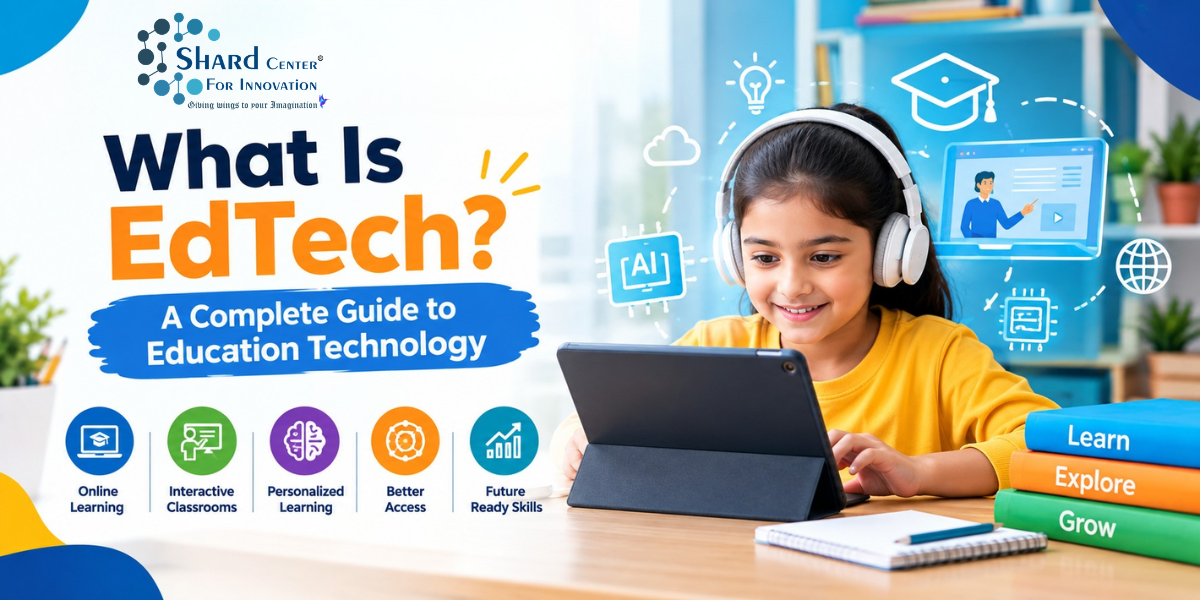
The term “EdTech” is used everywhere, in schools and even in headlines related to startups. What does the term “EdTech” really mean? This guide seeks to explain what education technology is and why it matters.
The Simple Definition
EdTech, or “education technology," refers to the utilization of technology to enable, enhance, and deliver education solutions. It includes software, hardware, and online platforms that improve education delivery. The motive of improving education drives all EdTech offerings.
More Than a Digital School
EdTech does not involve simply having textbooks and lectures online. EdTech has revolutionized learning by enabling new methods of learning that were not possible before:
•Personalization—it includes content that is individualized for each learner, rather than a common lesson for all learners.
•Instant feedback—it enables immediate, tech-led feedback for both learners and developers.
•Access—it enables global access and makes learning possible anywhere with a suitable internet connection.
•Engagement—it includes novel methods of instruction that are interactive, gamified, and engaging for the learner.
•Data and insight—it includes detailed observations on how each student is progressing.
These factors have led EdTech to be a transformative revolution for education
The Main Types of EdTech
EdTech involves several different technological innovations, which can be enumerated below.
Learning platforms and apps. Online courses, learning apps, and platforms (like MOOCs and course marketplaces) that provide educational content to the learners directly.
Learning Management Systems (LMS). These are software systems used by institutions to organize, provide, and track courses and student learning.
AI-powered tools. These include adaptive AI learning systems and innovations like AI tutors and automated assessments, which improve learning delivery without replacing teachers. (See How AI Is Transforming the EdTech Industry.)
Immersive technology. Technology such as augmented reality (AR) and virtual reality (VR) enables experimental and immersive learning for students.
Gamification and game-based learning. Gamification of learning makes it fun and motivating for students and makes education a lot more like play.
Hands-on and STEM tech. Technologies such as robotics, coding, 3D printers, and virtual labs led students to create as they learned and developed real-world skills. This is also the focus of SHARD’s STEM courses
Smart classroom tools. Tools such as interactive whiteboards, digital displays, and connected devices improve and complement, rather than replace, in-person teaching.
Assessment and analytics tools. Analytics tools such as digital testing, proctoring, and data platforms enhance and provide data-driven insights on student learning.
How EdTech Actually Works
EdTech enhances education delivery by utilizing technology and data. Lessons and exercises are provided through tech-based apps and platforms. Data is also collected to improve user experience. For example, personalized learning continuously adapts content based upon the user’s responses (More in
Who Uses EdTech?
EdTech is utilized by many segments of the society to improve their learning and teaching experiences:
- Students and learners of all ages, ranging from preschoolers to professionals.
- Teachers and educators utilize it to efficiently deliver lessons and track progress.
- Schools and institutions adopt the platforms to enhance education delivery.
- Parents can also use EdTech-based apps to support their child’s education.
- Companies utilize EdTech for training their employees.
Why EdTech Matters
EdTech makes education delivery efficient by solving several challenges centered around education delivery. It contributes to inclusive learning by connecting places that lack good schools and teachers through digital technology. It also allows more personalization than that in a busy classroom. It allows students to upskill themselves in a tech-led world. Like all tools, the value of EdTech Institutes empowers young innovators with STEM education, shows how well it is utilized and complements traditional teaching instruction.
The Key Takeaway
EdTech is revolutionizing the education industry by offering many innovations such as apps, platforms, AI tools, and hands-on STEM technology. It does not seek to replace traditional education but rather complements teachers and classrooms.
(This article is part of our complete guide: EdTech in India: The Complete Guide to Education Technology
(Frequently Asked Questions) FAQs
Q1: What does EdTech mean?
Ans: EdTech (education technology) is the use of technology such as software, hardware, apps, and AI to enhance education delivery and make learning more accessible.
Q2: What are examples of EdTech?
Ans: Online course platforms, AI tutors, adaptive learning systems, robotics, coding kits, and AR/VR learning are all examples of EdTech.